
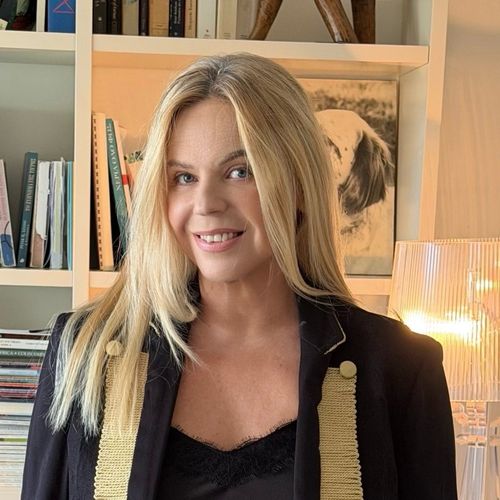
I work as a psychotherapist in Greek, English and French. Along the way, and over the years, I have noticed something I find particularly interesting: the way we speak about what happens to us is not always simply a means of communication.
There are things that are easier to say in our first language. And there are others that, somewhat unexpectedly, we can approach more easily in a second.
Sometimes the distance another language creates allows us to speak about something difficult without feeling quite so close to the emotion. And that small distance can make expression easier.
What changes when we talk about our emotions in another language?
Research suggests that the way we remember, describe and experience emotional events can be shaped by the language we use.
It does not work the same way for everyone, though.
Our personal history matters, and so does when and how we learnt each language, the relationship we have with it, and the experiences attached to it.
A first language is often tied to a heavier emotional charge. For some people, though, a second language can work differently: it can create a small space between the person and their experience, so that something difficult can first be said, and then become more approachable.
For someone else, the opposite may be true.
They may need Greek in order to reach what they actually feel.
So there is no one right choice.
Does psychotherapy have to take place in your first language?
Not necessarily.
What matters more, to me, is that there is room for the way of expressing oneself in which a person can feel most themselves. And that is not necessarily fixed.
It can change even within a single session.
We might begin in English and, at some point, a Greek word appears.
Or the other way round.
I am in no hurry to translate it.
We listen to it.
Because sometimes a word carries something more than its meaning. It can bring with it a memory, an emotion, or something that until that moment had not found a way to be said.
And perhaps that is one of the most interesting things about multilingual psychotherapy: that moving from one language to another is not always random. It can mark a shift in the way we experience or approach what is happening inside us.
Research has shown that, for some people, switching between languages can make it easier to express emotions, or can offer a useful emotional distance. For others it can make it harder to convey precisely what they feel. The experience is personal, and it is shaped by each person’s history and by their relationship with each language.
So perhaps the most important question is not, in the end:
What language do you hurt in?
But whether there is a way — and a person across from you — with whom you can speak about what hurts.
Because sometimes we do not need to find the right word straight away.
We need first to feel that we can say it.
If you would like to know a little more about me and the way I work, you can read Get to know me.